Jackpot Slots on the Move: Swiss Legal Standards for Mobile Gaming and Transaction Methods
Parker Franke · Aug 20, 2026
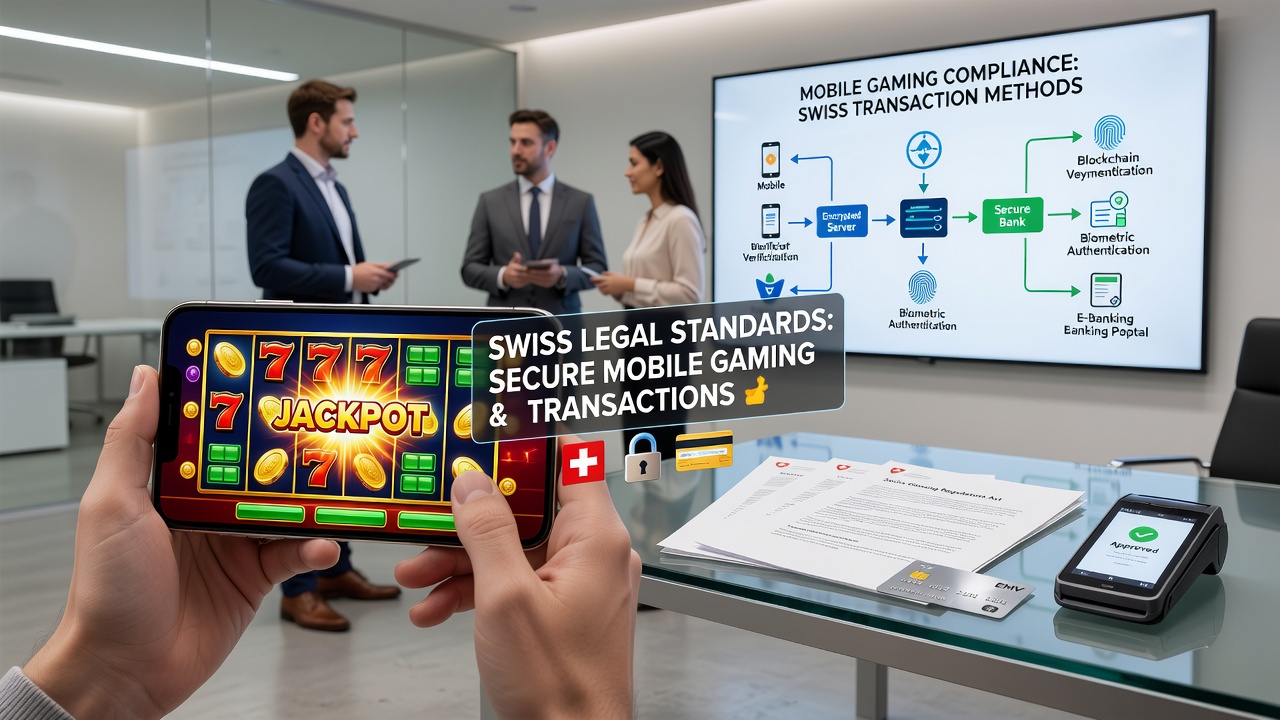
Jackpot Slots on the Move: Swiss Legal Standards for Mobile Gaming and Transaction Methods
Swiss legislation governing online gambling has evolved to address the rapid growth of mobile platforms, with jackpot slots representing one of the most popular categories accessed through smartphones and tablets. The Federal Act on Gambling and the associated ordinances set clear requirements for licensing, player protection, and secure financial transactions that apply equally to desktop and mobile environments. Operators must obtain approval from the Swiss Federal Gaming Board before offering games to residents, and this approval process includes specific evaluations of mobile software, server locations, and payment processing systems.
Research from regulatory monitoring bodies shows that mobile gaming accounts for a substantial share of overall online casino activity within Switzerland. Standards require that all games, including progressive jackpot slots, display certified random number generators and maintain the same payout percentages regardless of the device used. Transaction methods face additional scrutiny because mobile users often rely on digital wallets, bank transfers, and prepaid cards, each of which must comply with anti-money laundering rules enforced under the same federal framework.
Core Licensing Requirements for Mobile Operators
Any company seeking to offer jackpot slots to Swiss players on mobile devices must hold a concession issued by the competent cantonal or federal authority. Concessions demand that the operator maintains technical infrastructure capable of delivering uninterrupted service, logging all transactions, and restricting access to players located inside Switzerland through geolocation verification. These obligations remain identical whether a player connects via Wi-Fi, mobile data, or a combination of both.
According to the Swiss Federal Gaming Board, concession holders undergo regular audits that cover mobile application security, data encryption standards, and the integrity of jackpot pools. Failure to meet these benchmarks can result in suspension of the license, removal of the mobile offering, or financial penalties. Observers note that several international operators have adjusted their mobile platforms specifically to satisfy Swiss encryption and logging requirements before entering the market.
Transaction Methods and Security Standards
Payment processing for mobile gaming must route through licensed financial institutions or approved payment service providers. The law prohibits operators from accepting cryptocurrency or anonymous prepaid vouchers that bypass identity checks. Instead, common methods include SEPA transfers, credit and debit cards issued by Swiss or EU banks, and certain e-wallets that transmit verified user data to the operator in real time.
Studies conducted by the Swiss Institute of Comparative Law indicate that transaction monitoring systems must flag unusual deposit patterns within seconds, particularly for jackpot slot play where large single bets can occur. Operators are required to implement two-factor authentication for withdrawals exceeding defined thresholds and to store all transaction records for a minimum period defined by federal ordinance. These rules apply uniformly across mobile and desktop channels, yet mobile environments receive extra attention because of the higher volume of micro-transactions.

Player Protection Measures Specific to Mobile Play
Swiss regulations mandate that mobile gaming interfaces display responsible gambling tools directly on the screen, including deposit limits, session time reminders, and self-exclusion options. Jackpot slot games must pause automatically when a player reaches a pre-set limit, and the system must prevent further bets until the player actively confirms continuation. Data collected by independent testing laboratories shows high compliance rates among licensed operators, with most platforms integrating these tools at the account level rather than per game.
Those who have examined Swiss enforcement records point out that mobile-specific violations often involve inadequate age verification during account creation on smartphones. To address this, regulators require operators to cross-reference mobile phone numbers and IP addresses against official databases before allowing any gameplay, including access to jackpot features. Non-compliance triggers immediate suspension of the affected mobile account.
Developments Scheduled for August 2026
Updated technical guidelines scheduled to take effect in August 2026 will introduce enhanced requirements for real-time jackpot monitoring across mobile networks. These guidelines will require operators to transmit anonymized jackpot pool data to a central regulatory server every sixty seconds, enabling faster detection of irregularities. Transaction methods will also face new reporting intervals for deposits and withdrawals made through mobile applications, tightening the existing anti-money laundering controls.
Industry reports prepared by European research institutions forecast that these changes will increase operational costs for smaller concession holders while strengthening overall market integrity. The Swiss Federal Gaming Board has already begun pilot testing the new data interfaces with selected operators to ensure smooth rollout by the August deadline.
Conclusion
Swiss legal standards continue to shape how jackpot slots reach players on mobile devices, balancing market access with strict controls on licensing, transactions, and player protection. Requirements remain consistent across platforms yet receive additional technical scrutiny when mobile channels are involved. As the August 2026 updates approach, operators and regulators alike focus on refining data exchange systems and payment verification procedures to maintain compliance. The framework provides a clear model for other jurisdictions examining similar mobile gaming regulations while preserving the core principles of transparency and security established under current federal law.